Recipe by Joe Leckie, Photography by Dan Tyler Ross
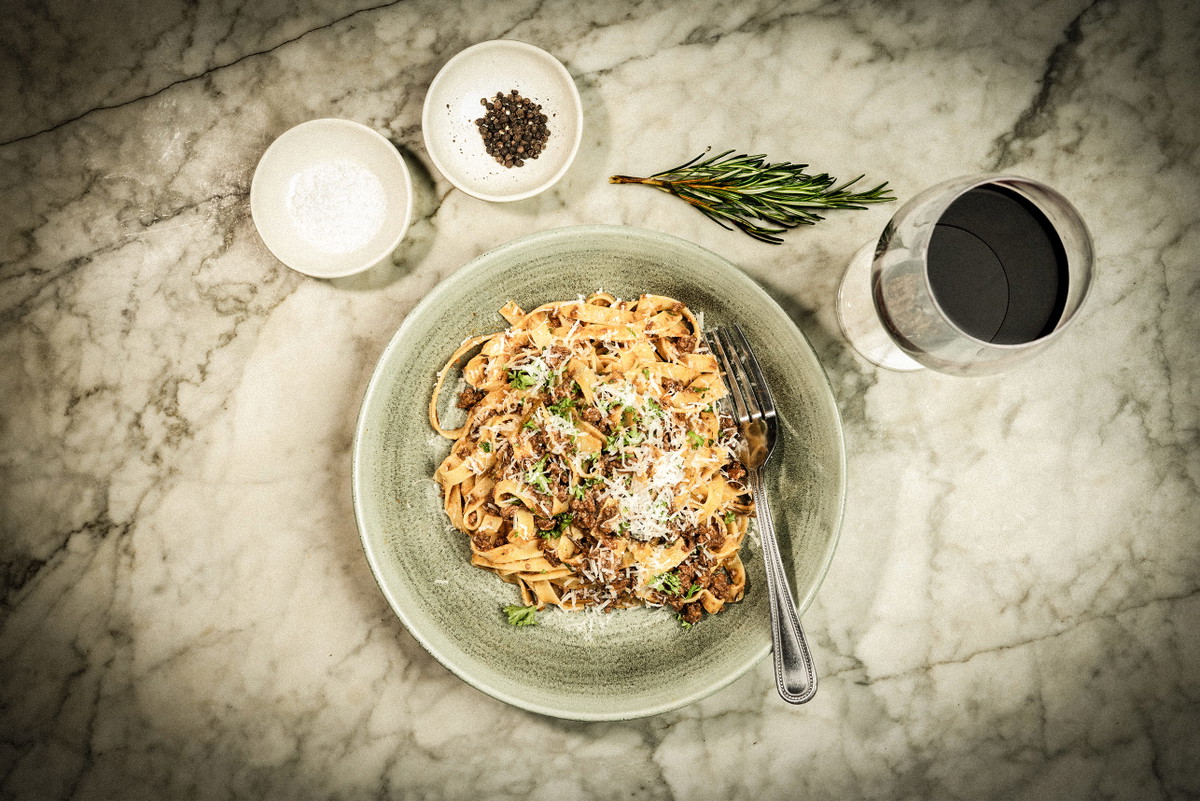
Pappardelle with venison ragu and parmesan. Easy deer ragu recipe
Pappardelle with venison ragu recipe overview
The origins of this ragu are rooted in the rural landscapes of Italy - traditionally a "hunter’s sauce" (Cinghiale) made with wild boar in the forests of Tuscany. By preparing pappardelle with venison ragu, we are honouring that ancient connection between the land and the table. While modern iterations often rely on domestic beef, substituting with Noble & Wild venison introduces a level of provenance and complexity that farmed meat cannot replicate.
Using wild venison instead of beef creates a more interesting and sophisticated flavour profile. Beef tends to offer a singular, fatty richness; in contrast, wild venison is lean and herbaceous. Since wild deer forage on a natural diet of heather, wild grasses, and forest flora, the meat carries subtle notes of the landscape itself. This creates a ragu with an earthy, slightly sweet depth that stands up beautifully to the heavy aromatics of rosemary and red wine. The result is a sauce with incredible silkiness and a sustainable, nutrient-dense alternative that turns a classic comfort dish into a true exploration of wild Scottish provenance.
Ingredients for pappardelle and venison ragu
To achieve the best results, every ingredient should be chosen for its quality. Noble & Wild venison is the star here, but the supporting ingredients are just as vital for building layers of flavour.
- 750g Noble & Wild Venison Mince: The foundation of the dish.
- The Soffritto: 1 carrot, 1 leek, 1 onion, and 1 stick of celery, all very finely chopped.
- Aromatics: 2 cloves of garlic, a bunch of fresh rosemary, a bunch of thyme, and 2 bay leaves.
- Liquids: 125ml dry red wine, 400ml quality chicken stock, and 1 tbsp balsamic vinegar for a touch of bright acidity.
- Tomatoes: 1 can of San Marzano tomatoes and 2 tbsp of concentrated tomato puree.
- Umami Flavour: 5 dashes of Worcestershire sauce.
- To Serve: 300g dried or fresh pappardelle, 50g aged Parmesan, a handful of fresh parsley, and 50g of butter to emulsify the sauce.
Step by step cooking method
Step 1: Brown the Meat.
Heat a heavy-based, oven-proof casserole dish over high heat. Brown the venison mince so a dark, caramelized crust forms on the meat, as this provides the deep meaty flavour we’re looking for.
Step 2: Deglaze.
Once browned, remove the meat. Add a splash of water to the pan and scrape up the "fond" (the brown bits stuck to the bottom). This holds a lot of flavour, so we want to incorporate back into the meat.
Step 3: Soften the Veg.
Lower the heat, add olive oil, and sauté your finely chopped vegetables (the soffritto) for 20 minutes. They should be sweet, sticky, and translucent.
Step 4: Build the Sauce.
Stir in the tomato puree and cook for 2 minutes. Add the wine and let it reduce by half. Return the meat to the pan along with the stock, canned tomatoes, Worcestershire sauce, herbs, and balsamic vinegar. Season generously.
Step 5: Slow-Cook Overnight.
Cover the pot and place it in an oven set to 95°C (200°F). Leave it overnight (or for 8 hours).
Step 6: Finishing touches.
The next morning, reduce the sauce on the hob until thick. Let it rest in the fridge for another night if possible, as ragu tastes better the next day.
How to make venison ragu
The secret to how to make venison ragu that feels rich is to balance of fats and acids. Since venison is so lean, we rely on the olive oil in the soffritto and the final addition of butter to give the sauce a velvety mouthfeel.
When simmering, ensure the San Marzano tomatoes are crushed by hand or with a wooden spoon. As the ragu cooks overnight at a low temperature, the water evaporates slowly, concentrating the natural sugars in the carrots and tomatoes. If the sauce looks too thin the next morning, a brisk 15-minute simmer on the stovetop will tighten it up into a thick, clingy consistency that is essential for venison ragu.
How to make homemade pappardelle
While store-bought fresh pappardelle is excellent, knowing how to make homemade pappardelle will take this meal to the next level. Pappardelle are broad, flat pasta noodles, traditionally about 2-3cm wide.
To make them, create a mound of 400g 00 flour, make a well in the centre, and add 4 large eggs. Incorporate the flour slowly with a fork until a dough forms, then knead for 10 minutes until smooth and elastic. Wrap in film and rest for 30 minutes. Roll the dough out very thinly (using a machine or rolling pin) and cut into wide ribbons using a fluted pastry wheel or a knife. Fresh pasta only needs 2–3 minutes in salted boiling water, providing a delicate, "al dente" bite that pairs beautifully with the venison.
Combining pappardelle with venison ragu
For the perfect restaurant feel, I wouldn't recommend blobbing the sauce directly on top of plain pasta, but instead combine the sauce with the pappardelle in a deep pan.
Bring a large pot of heavily salted water to a boil. Cook your pasta until it is just shy of al dente. While the pasta cooks, warm a generous portion of the ragu in a wide skillet. Use tongs to transfer the pasta directly from the water into the ragu. Add a splash of the starchy pasta water and the 50g of butter. Toss vigorously over medium heat. This creates an emulsion, allowing the sauce to coat every millimetre of the wide pappardelle ribbons rather than sliding off.
How to store pappardelle and venison ragu
If you find yourself with leftovers, knowing how to store pappardelle and venison ragu properly ensures you can enjoy a second gourmet meal.
- The Sauce: The ragu itself stores beautifully. In fact, it is better on day two. Keep it in an airtight container in the fridge for up to 3 days or freeze it for up to 3 months.
- The Pasta: It is always best to store the sauce and pasta separately if possible. If they are already mixed, the pasta will continue to absorb the sauce and may become soft.
- Reheating: To reheat, place the ragu in a pan with a tiny splash of water or stock to loosen it up. If reheating the combined dish, do so gently on the stovetop rather than the microwave to maintain the texture of the venison.